

Clinton limits new cannabis and vape shops
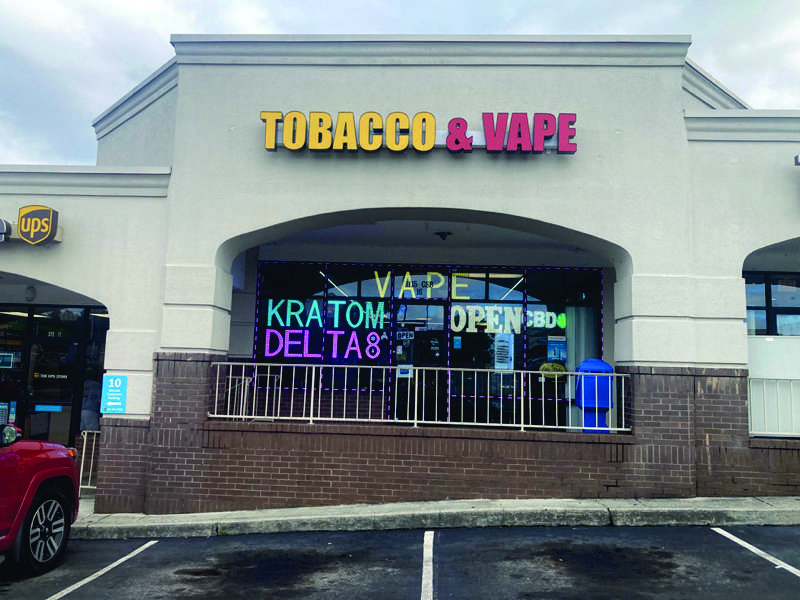
The Clinton City Council recently approved an ordinance limiting the number of new specialty vape stores by defining them as businesses that devote at least 25% of their retail space to electronic smoking devices and related products. The new ordinance does not impact the existing retail stores that are open in Clinton.
The final votes on two ordinances — one focused on zoning and the other on licensing — came during the June 22 City Council meeting, putting both measures into effect.
All council members present voted in favor of the ordinances. Members David Queener and Brian Hatmaker were absent.
The zoning ordinance defines “specialty shops” as stores dedicating 25% or more of their floor space to “electronic cigarettes/vaping devices, e-liquids/cartridges, edibles, concentrates or oil containing cannabis derivatives (including but not limited to CBD, Delta-8, Delta-9 or similar compounds permitted by law), kratom, glassware, pipes, vaporizers and other smoking or inhalation devices.”
The ordinance regulates specialty shops in the following ways:
• Only three specialty shops may operate per 10,000 residents. Clinton’s current population, according to the U.S. Census Bureau, is 10,056.
• Shops must be at least 1,000 feet from another specialty shop and at least 500 feet from a public or private school, daycare or public park.
The regulations will not immediately affect the eight existing stores in Clinton that fit the definition.
However, they will apply to any new specialty shops. If an existing business changes its layout for at least six months so that less than 25% of its floor space is devoted to the listed products, it would have to comply with the new regulations if it later expands those products to more than 25% of its floor space.
A second ordinance establishes licensing requirements for specialty shops and addresses what would happen if a disaster forced a shop to close temporarily. The owner would have a 12-month period to reapply without affecting the city’s overall license limit.
Neither ordinance applies to stores with less than 25% of their floor space dedicated to the listed products, meaning many gas stations selling those products may continue operating as they have.
Fred Richmond, owner of Tennessee Vapor Factory at 845 Clinch Ave., criticized the ordinance, saying it unfairly targets specialty shops while allowing general retailers to continue selling many of the same products.
He said businesses can violate existing laws regardless of how much floor space is devoted to those products.
“I’m a business that has no violations whatsoever, versus all these ones that are already selling to minors,” Richmond said. “I’m not happy being put under a microscope in a way that other businesses aren’t being put under a microscope.”
Council member Wendy Maness defended the focus on specialty shops in an interview with The Courier News.
She previously spoke in favor of the regulations during earlier meetings and also serves as youth prevention coordinator for Allies for Substance Abuse Prevention. She said the regulations are similar to those adopted in Middle Tennessee communities, although Clinton is the first East Tennessee city to enact them.
“We know that the more vape stores we have, the more likely we are to have students become addicted,” she said. “At gas stations, they have to follow the law just like a specialty shop would. Although we’re finding that more specialty shops may not be IDing those who are under 21 or even look under 21.
“None of it’s good,” she said. “Kids are getting them, and they’re very dangerous for those brains that are still developing.”
Maness said she did not consider voting on the ordinances to be a conflict of interest because she was not voting as an ASAP representative. She also said constituents had asked her to limit the number of specialty shops before she began working for the organization.
The council approved the ordinances on first reading at earlier meetings. Like all Clinton ordinances, they required approval on two readings before taking effect.
City Planner Preston Stokes said the second reading was delayed until the June 22 meeting so the city could review whether recent state laws would affect the language. He said city staff ultimately recommended no changes to either ordinance.
Tennessee recently banned several cannabis-derived products, including THCA, and also banned kratom. Both bans take effect July 1.
Those products were included in the ordinance’s definition of specialty shops.
However, Stokes said the state laws did not require changes to the city’s language.
“It really does not impact the proposed language, as we just wanted to capture what is considered a specialty shop,” Stokes said. “If the item is banned at the state level, it effectively bans it at the local level.”