
Watching every move
Flock cameras spark privacy debate; officials defend public safety
-

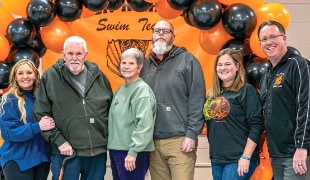
Clinton resident Delanie Davis addresses the Clinton City Council during its July 27 meeting, voicing concerns about the city’s use of Flock cameras. Davis, a veteran and mother, said she believes the cameras are unconstitutional and invade the privacy of citizens. - ACTV
-
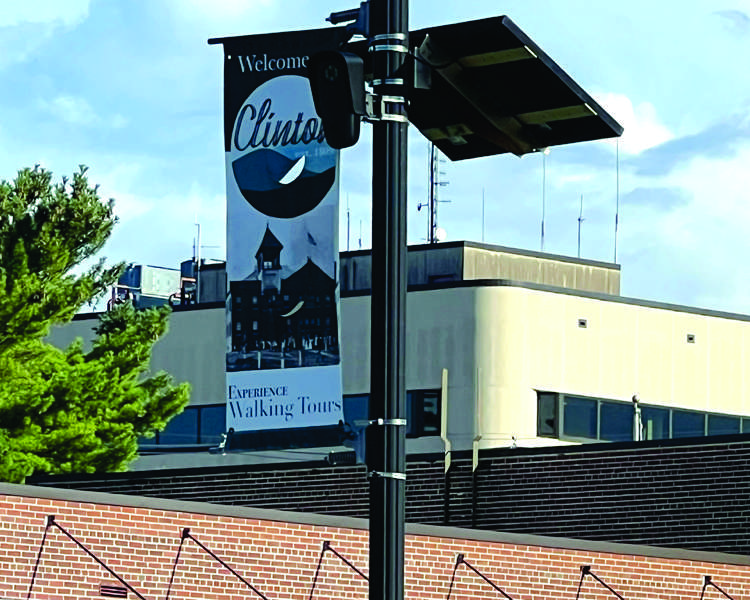
This Flock license-plate-reader camera, powered by its own solar-cell panel, is mounted on a pole near Clinton City Hall, at the intersection of Leinart and North Hicks streets. This camera watches traffic approaching Clinton Elementary School. - ACTV
Is it now true that “Big Brother is watching you,” as the famous warning from George Orwell’s classic book “1984” suggests?
The short answer is that in some ways, yes. But it might not be just from those pole-mounted surveillance cameras supplied by vendor Flock Safety.
Our cellphones, GPS-based systems in many of our vehicles, and even some of our computers, TVs and other “connected” home-based devices – such as Amazon Alexa and Google Home – are also keeping an eye (and ear) on us.
As for the growing network of Flock cameras – generically known as Automatic License Plate Readers – they are in use throughout much of Anderson County and beyond, and despite the growing controversy about them in many areas, local leaders stand by their use as tools to help make our communities safer.
The city of Clinton has four of them for general surveillance, watching each of the main entrances to the city, according to City Manager Roger Houck, and the city school system has an additional four, placed around the schools.
The cameras record the license plate numbers of cars passing through, and log them into a database that compares them with numbers that law-enforcement authorities have entered into the system that are known to have been attached to stolen vehicles or vehicles involved in crimes, including child abductions.
Anderson County has four Flock cameras – three of them mounted on poles in stationary positions, and a fourth one that is portable, according to County Mayor Terry Frank.
Frank said she supports use of the cameras in the interest of public safety.
Rocky Top currently has two cameras, although Chief of Police John Thomas told The Courier News that those would be going away after the city’s contract with Flock Safety, the cameras’ vendor, expires in October.
“We pay $3,500 a year for each camera, but have not had enough results from them to justify the continued expense,” he said.
But Thomas, who was on the Oak Ridge Police Department before taking the position in Rocky Top, said the Oak Ridge department has been using Flock cameras for the past “nine or 10 years,” and has been successful using them to help find stolen vehicles, missing people and wanted persons, among other things.
According to a website that provides a map showing Flock camera locations nationwide, there are about 17 in Oak Ridge, although not all of those are operated by the Police Department.
Thomas said some “big box stores” such as Walmart and Lowe’s have their own Flock cameras in their parking lots to help with loss prevention.
For now, there are no Flock cameras in Norris, according to City Manager Bailey Whited.
The city did have one, mounted at the entrance to the city on East Norris Road off Andersonville Highway, but that camera has since been removed because of budget constraints, he said.
Clinton Mayor Scott Burton said he supports the use of the cameras in the city because he believes they help keep the community safer.
“This is just another tool for police to use to protect us,” he said.
He cited two recent incidents in other areas not far away where the Flock cameras helped locate kidnapped children and get them returned home safely.
“There was an incident in Atlanta where a car was stolen with a child in the backseat, and the car was located within 14 minutes using Flock cameras,” he said. There was a similar incident in Winchester, Tennessee, he added.
“If it was my child, I’d want every tool out there to protect them,” he said.
Burton said there are “a lot of misconceptions about what these cameras do.”
The cameras operated locally do not record images of people in the cars, nor do they measure vehicle speed or watch for traffic violations, officials noted.
“Ours are just the basic model, reading license plate numbers,” Burton said.
An online site opposed to the cameras, deflock.org, operates a searchable map that allows people to see where the cameras are in their communities.
According to the group’s website, “Automated License Plate Readers (ALPRs or LPRs) are AI-powered cameras that capture and analyze images of all passing vehicles, storing details like your car’s location, date, and time. They also capture your car’s make, model, color, and identifying features such as dents, roof racks, and bumper stickers, often turning these into searchable data points.
“These cameras collect data on millions of vehicles regardless of whether the driver is suspected of a crime. These systems are marketed as indispensable tools to fight crime, but they ignore the powerful tools police already have to track criminals, such as cell phone location data, creating a loophole that doesn’t require a warrant.”