
Museum opens Cline wagon, pearling exhibits
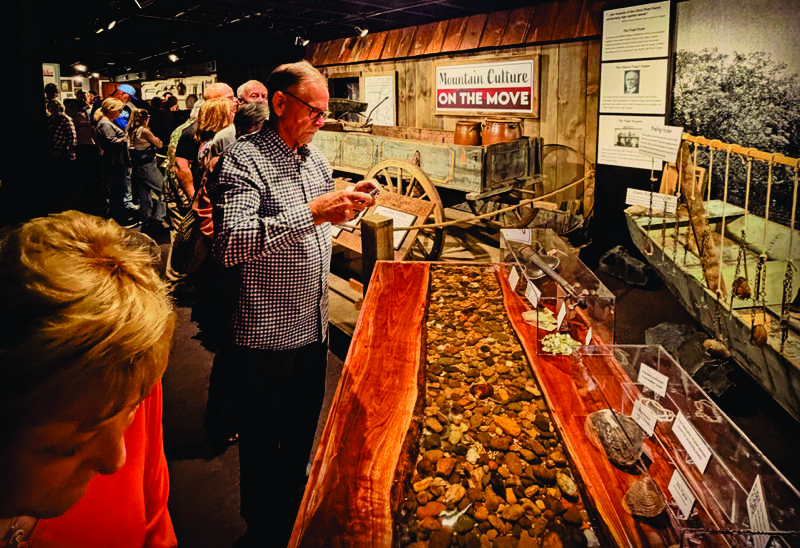
In this photo from the Museum of Appalachia, visitors check out the new Clinch River Pearling exhibit, which opened last Friday at the museum in Norris. (photo:Museum of Appalachia )
One is the Cline Wagon exhibit, which follows an historic Claiborne County wagon from its Appalachian roots to Michigan and back decades later, and second is the Clinch River Pearling exhibit, which explores how pearls harvested from the Clinch River helped connect Clinton to an international market.
Both were opened to museum visitors on Friday (Oct. 16).
The Cline Wagon exhibit is built around what is thought to be the only surviving wagon from the shop of brothers Alex and Wade Cline, who began making farm wagons and implements in the Claiborne County community of Dogwood in 1917.
Their work even caught the eye of noted Tennessee photographer Joe Clark —later known for the black-and-white photography behind Jack Daniel’s long-running advertising campaign — who documented the brothers at work.
The wagon on display dates to the final years of Alex Cline’s life, and survives as a rare piece of the craftsmanship for which the shop was known.
But the wagon carries other history as well. When A.G. Turner, Cline’s nephew by marriage, left East Tennessee for work in Michigan, he took the wagon north with him, a tangible piece of home traveling the same route as thousands of Appalachians seeking opportunity in northern industrial centers.
That decades-long migration became known as the “Hillbilly Highway.”
After more than a half-century in Michigan, the wagon nearly slipped out of the family’s hands before returning to East Tennessee in 2017.
WBIR’s late Ken Schwall documented its homecoming with museum board member Steve Dean and retired WBIR videographer Doug Mills, ending at the Museum of Appalachia, where the Turner family had long hoped it would find a permanent home.
The wagon now carries two intertwined stories: the Appalachian craftsmanship that produced it, and the migration that carried it north.
Housed alongside the Cline Wagon in a newly completed wing of the museum’s Hall of Fame building, the Clinch River Pearling exhibit shifts the focus to another chapter of East Tennessee history.
At the turn of the 20th century, Clinton found itself at the center of an unlikely international trade. Pearls pulled from the Clinch River drew buyers from New York, while prized local finds traveled far beyond East Tennessee, including to the Paris Exposition in 1900.
What began in the mussel beds of a nearby river became a valuable commodity with a market extending well beyond the region.
The Clinch River Pearling exhibit brings that era into view through an extremely rare Clinch River pearl and the people whose searches, discoveries and dealings built an industry around it.
This story has new national relevance in 2026: Tennessee’s freshwater pearl is one of eight items representing the state in the Smithsonian National Museum of Natural History’s new From These Lands exhibition, part of the Smithsonian’s commemoration of America’s 250th anniversary.
The Museum of Appalachia is a Smithsonian affiliate in Norris, dedicated to preserving and interpreting the history and culture of the people of Southern Appalachia.